
"branches and leaves"
1000 article(s) found

Species morphology of Colombian coffee
The main varieties of Colombian coffee are small grains of coffee. Plants are small trees or large shrubs, 5-8 m tall, usually much branched at base; old branches gray-white, nodes dilated, young branches glabrous, compressed. Leaves thinly leathery, ovate-lanceolate or lanceolate, 6-14 cm long and 3.5-5 cm wide, tip long acuminate, acuminate part 10-15 mm long, base cuneate or slightly obtuse, rarely rounded, entire or

Species morphology of Colombian coffee
The main varieties of Colombian coffee are small grains of coffee. Plants are small trees or large shrubs, 5-8 m tall, usually much branched at base; old branches gray-white, nodes dilated, young branches glabrous, compressed. Leaves thinly leathery, ovate-lanceolate or lanceolate, 6-14 cm long and 3.5-5 cm wide, tip long acuminate, acuminate part 10-15 mm long, base cuneate or slightly obtuse, rarely rounded, entire or

Prevention and control of small-grain coffee diseases (coffee rust, coffee anthracnose)
1. Coffee rust is the main disease of coffee, the most harmful, the damaged plants, light reduced yield, serious death. Coffee rust is mainly harmful to leaves and sometimes to young fruits and twigs. After the leaves were infected, many light yellow spots appeared at first and enlarged in the form of water stains, followed by orange-yellow powdery spores on the back of the leaves, and there was a light green halo around the disease spots, which gradually expanded or connected in the later stage.

Species morphology of Colombian coffee
The varieties of Lambian coffee are mainly small-grain coffee. Plants are small trees or large shrubs, 5-8 m tall, usually much branched at base; old branches gray-white, nodes dilated, young branches glabrous, compressed. Leaves thinly leathery, ovate-lanceolate or lanceolate, 6-14 cm long and 3.5-5 cm wide, tip long acuminate, acuminate part 10-15 mm long, base cuneate or slightly obtuse, rarely rounded, entire or present

What kind of tea is Oriental Beauty Tea? Taste characteristics of Oriental Beauty Black Tea with White Heart and White leaves in Taiwan
Citrus wood rattan, also known as Baixin or white leaves, is a late-growing black tea variety with medium tree type, dense branches and leaves, yellow bud color, oval to Obovate leaves and more flowers. This variety was planted in Taoyuan, Hsinchu and Miaoli in the early days, but now it has passed Jiazi's old tea trees, but black tea was exported to Taiwan in the past.

Fine coffee Colombian coffee species morphology
The main varieties of Colombian coffee are small grains of coffee. Plants are small trees or large shrubs, 5-8 m tall, usually much branched at base; old branches gray-white, nodes dilated, young branches glabrous, compressed. Leaves thinly leathery, ovate-lanceolate or lanceolate, 6-14 cm long and 3.5-5 cm wide, tip long acuminate, acuminate part 10-15 mm long, base cuneate or slightly obtuse, rarely rounded, entire or

Jamaica Blue Mountain, Yunnan Arabica, Babua Bird of Paradise Single Coffee Flavor Comparison
Typica is one of the oldest native varieties in Ethiopia. The top leaves of Tiebika are bronze, the beans are oval or thin and pointed; the flavor is elegant, but the constitution is weak, the disease resistance is poor, and the fruit yield is small. Typica is one of the oldest varieties of Arabica coffee found today, the other being bourbon. Arabica species originated in Ethiopia

Species morphology of Colombian coffee bean
The main varieties of Colombian coffee are small grains of coffee. Plants are small trees or large shrubs, 5-8 m tall, usually much branched at base; old branches gray-white, nodes dilated, young branches glabrous, compressed. Leaves thinly leathery, ovate-lanceolate or lanceolate, 6-14 cm long and 3.5-5 cm wide, tip long acuminate, acuminate part 10-15 mm long, base cuneate or slightly obtuse, rarely rounded, entire or

Cultivation techniques of small Coffee cultivation of Coffee beans in Yunnan Province
Disease control: 1. Coffee rust is the main disease of coffee, the most harmful, the damaged plants, light reduced yield, heavy death. Coffee rust is mainly harmful to leaves and sometimes to young fruits and twigs. After the leaves were infected, many light yellow spots appeared at first and enlarged in the form of water stains, followed by orange-yellow powdery spores on the back of the leaves, and there was a light green halo around the disease spots, and the disease spots in the later stage.
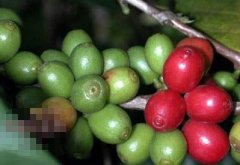
Planting and cultivation of Coffee
1. Seed propagation (1) seed collection, seed washing and seed storage during the full ripening period of coffee (the full ripening period of medium-grain coffee in Hainan Island is from February to March, and that of small seed is from September to November). The fully ripe fruits are picked from strong and high-yielding mother trees to make seeds. After the fruit is harvested, immediately peel and wash the seeds, the method is to put the fruit on the hard and rough ground, use a brick to grind the peel, or you can use a peeling machine

The whole process of coffee from picking to finished product-Yunnan coffee bean picking season
The whole process of coffee from picking to finished product-the Arabian coffee tree is usually a larger shrub during the Yunnan coffee picking season, with green, oval leaves and oval fruit, and generally has two flat seeds. If only one bean seed germinates, it's called pea-shaped coffee beans. The word Roberts comes from the most widely grown variety of Canifra coffee. Robbins is
Plant coffee trees correctly
One of the characteristics of a coffee tree is that its fruit can bear fruit several times a year, and another is that flowers and fruits coexist at different stages of ripening.

How to grow coffee beans _ how to grow coffee technical experience sharing _ can you make money by growing coffee beans
Professional coffee knowledge exchange more information on coffee beans Please follow the coffee workshop (Wechat official account cafe_style) Coffee lovers will study how to roast and brew coffee beans, but seldom delve into how coffee beans are grown. Today, Qianjie Coffee would like to share some knowledge of coffee bean cultivation with you. Shade planting (Shade-grown) and all-day planting (sun-g)

Brief introduction to the planting of Coffee trees
One of the characteristics of a coffee tree is that its fruit can bear fruit several times a year, and another is that flowers and fruits coexist at different stages of ripening.

Morphological characteristics and planting environment of small-grain coffee
Morphological characteristics edit small trees or large shrubs, 5-8 m tall, base usually much branched; old branches gray, small-grained coffee (6) nodes inflated, young branches glabrous, compressed. Leaves thinly leathery, ovate-lanceolate or lanceolate, 6-14 cm long and 3.5-5 cm wide, tip long acuminate, acuminate part 10-15 mm long, base cuneate or slightly obtuse, rarely rounded, entire or present

Arabica coffee bean planting species morphology Colombian coffee bean
The main varieties of Colombian coffee are small grains of coffee. Plants are small trees or large shrubs, 5-8 m tall, usually much branched at base; old branches gray-white, nodes dilated, young branches glabrous, compressed. Leaves thinly leathery, ovate-lanceolate or lanceolate, 6-14 cm long and 3.5-5 cm wide, tip long acuminate, acuminate part 10-15 mm long, base cuneate or slightly obtuse, rarely rounded, entire or
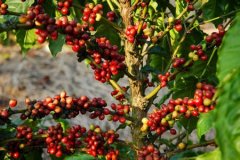
Planting and picking of Coffee trees
One of the characteristics of a coffee tree is that its fruit can bear fruit several times a year, and another is that flowers and fruits coexist at different stages of ripening.
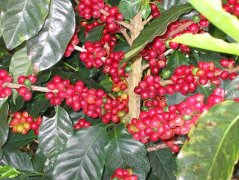
Colombian coffee bean species morphology Central and South American flavor
Species Morphology Colombian Coffee Plant Morphology Colombian coffee is mainly small grain coffee. Plants are small trees or large shrubs, 5-8 m tall, usually much branched at base; old branches gray-white, nodes dilated, young branches glabrous, compressed. Leaves thinly leathery, ovate-lanceolate or lanceolate, 6-14 cm long and 3.5-5 cm wide, tip long acuminate, acuminate 10-15 mm long, basal

Yunnan Coffea arabica Flower and Fruit Mountain Characteristics Flavor Description Processing Method Production Area Manor Introduction
The growth and development of coffee is closely related to climatic and environmental conditions. In the areas with strong wind, high temperature, strong light and easy drought soil, axillary buds tend to differentiate into flower buds, and the growth of branches is small, which is easy to cause premature senescence. Therefore, we should choose a place with calm wind, high humidity and short light as a garden.

Brief introduction of acidity in picking process of Fine Coffee beans in Huilan, Colombia
Colombia is rich in products, especially coffee, flowers, gold and emeralds known as the four treasures. In 1808, a priest introduced coffee to Colombia for the first time from the French Antilles via Venezuela. Today, the country is the second largest coffee producer after Brazil, the world's largest exporter of Arabica coffee beans and the world's largest exporter of washed coffee beans. Columby